The Discipline of Slow Flight

Slowing Down to Lead with Clarity
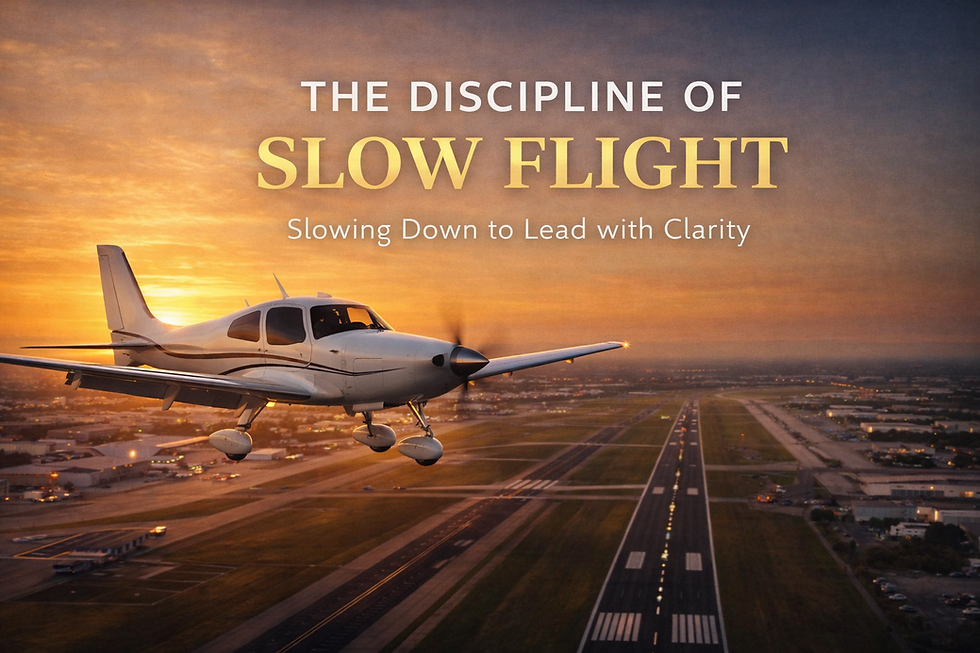
Slow flight sounds simple, doesn’t it? Just pull the power back, let the airplane slow down, and hold it there. But in aviation, slow flight is anything but casual. It is one of the most intentional, disciplined phases of flight a pilot will ever experience.
Slow flight usually happens close to the ground. It happens when you are preparing to land, when your margin for error is shrinking, when the airplane is no longer forgiving. Every control input matters. Every movement must be deliberate. There is no room for overreaction. There is no room for rushing. In slow flight, the pilot must become calm, measured, and precise.
The airplane is telling you something in slow flight. It is speaking through the controls, through the feel of the yoke, through the sound of the air moving over the wings. It is asking you to pay attention. It is asking you to respect the moment.
And the pilot who listens, the pilot who slows down, is the one who brings the airplane safely to the runway.
Now, here is where this discipline leaves the cockpit and enters our lives.
I have noticed something over the years, especially in conversations where there is disagreement. When tension enters the room, the natural human reaction is to speed up. Voices rise. Words come faster. People begin responding before the other person has even finished speaking. The conversation turns into a race instead of an exchange.
In those moments, we are doing the exact opposite of what a pilot would do in slow flight.
We are adding pressure when we should be removing it. We are reacting when we should be listening. We are rushing through a moment that actually requires more attention, not less.
There have been times when I have felt that shift happening in a conversation, when I could sense things starting to speed up, and I have simply said, “Let’s slow this conversation down so we can figure it out together.”
Something changes in that moment.
The pace drops. The tension softens. The conversation becomes less about winning and more about understanding. It creates space for both sides to be heard and, more importantly, brings clarity back into the room.
What if we applied the discipline of slow flight more often?
What if, instead of speeding up, we intentionally slowed everything down?
What if we allowed a pause before responding? What if we listened not just to reply, but to understand? What if we became aware of the tone, the pace, and the direction of the conversation the same way a pilot becomes aware of the airplane?
Because just like in aviation, when you are close to the ground in a conversation, when emotions are high, and the margin for misunderstanding is small, that is not the time to rush.
That is the time to slow down.
That is where clarity lives. That is where respect is built. That is where real leadership begins.
The discipline of slow flight is not just about flying an airplane safely to the runway. It is about navigating moments in life where precision, patience, and awareness matter most.
And the person who learns to slow down in those moments will not only avoid unnecessary conflict, but they will also lead others through it.
Be part of the Flight Crew!
The Aviation Discipline Mindset: 7 Disciplines to Transform Your Life and Leadership is scheduled for release
in June 2026. The book explores seven powerful disciplines drawn from aviation, and this is one of them.
If you would like to be part of the Advanced Readers List, I invite you to join the Flight Crew by following the link below:


Comments